Choosing the Right Sweetener for a Heart-Healthy Kitchen
 When you’re working hard to design a low-sodium, heart-healthy kitchen, your primary focus is usually on waking up savory flavors without reaching for a salt shaker. We lean heavily on robust vinegars, toasted aromatic spices, and fresh herbs to get the job done.
But what happens when a recipe calls for a touch of sweetness?
Whether you’re balancing the sharp acidity of a homemade lime vinaigrette, trying to get a pillowy rise on a batch of stovetop flatbreads, or just looking to take the edge off an afternoon iced tea, choosing a sweetener matters. In a healthy kitchen, it’s all about balancing nutritional goals (managing calories and blood sugar) with culinary physics (how a sweetener actually behaves under heat).
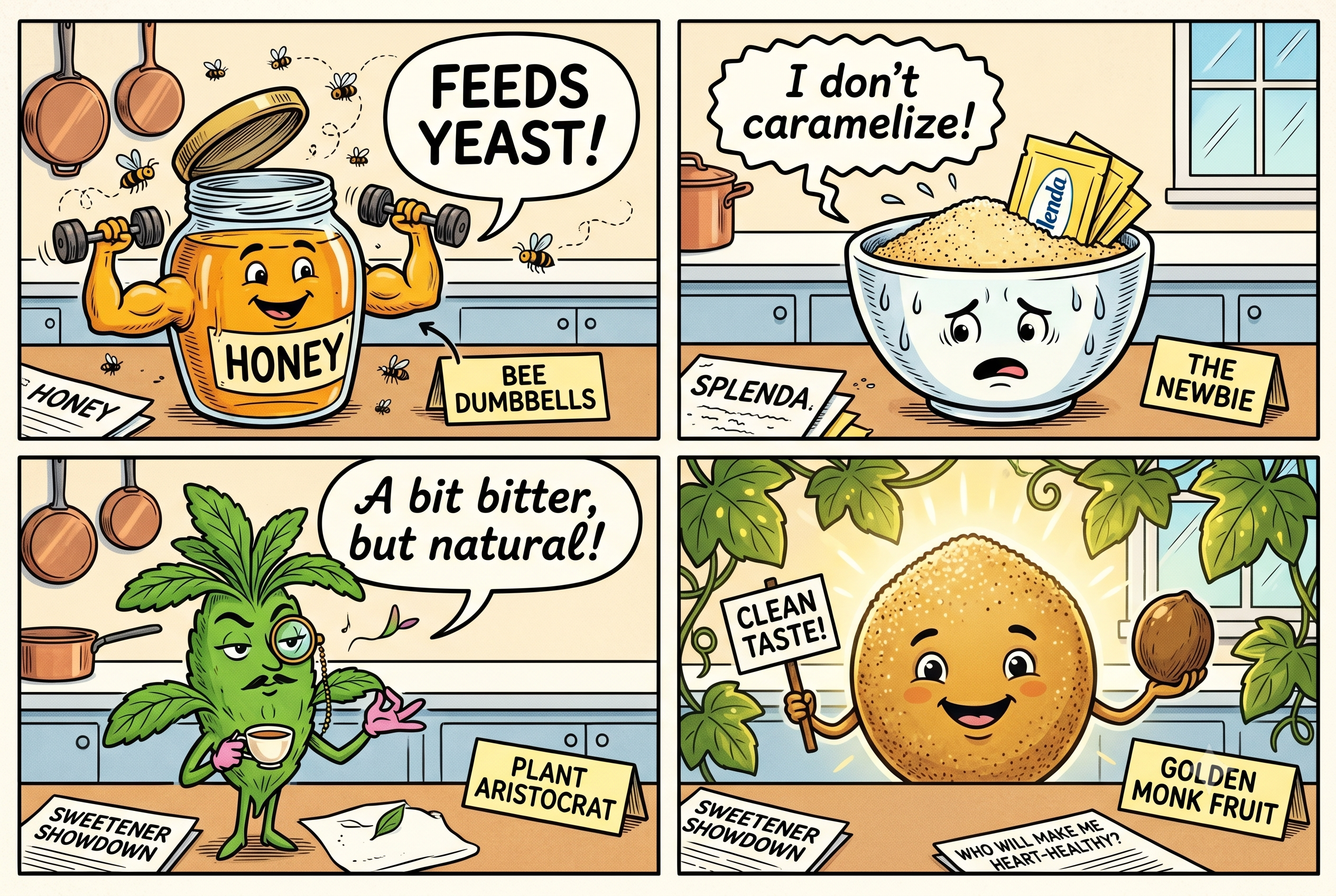
Today, we’re breaking down four of the most popular kitchen options—Honey, Splenda, Stevia, and Monk Fruit—to see which one deserves a spot in your pantry.
Sweeteners at a Glance: The Quick Reference
| Sweetener Profile | Honey | Splenda | Stevia | Monk Fruit |
| Type | Natural Liquid | Sucralose-Based | Plant Extract | Fruit Extract Blend |
| Calories & Carbs | High (~64 kcal / tbsp) | Zero | Zero | Zero |
| Glycemic Index | Moderate (45 to 64) | Zero | Zero | Zero |
| Feeds Yeast? | Yes! Excellent for bread. | No. | No. | No. |
| Browning/Caramel | Excellent. Gives a great char. | None. Pale results. | None. | None on its own. |
| Flavor Finish | Rich, complex, floral. | Clean, uniform, mild. | High intensity; licorice finish. | Clean, subtle, warm/fruity. |
| Common Bulking Agents | None (100% Pure) | Maltodextrin, Dextrose | Erythritol, Maltodextrin, or Inulin | Erythritol or Allulose |
Pantry Deep-Dive: The Pros, Cons, and Best Kitchen Uses
🍯 1. Honey: The Culinary Multiplier
If you are looking for a whole-food option that brings massive structural benefits to your cooking, raw honey is a powerhouse.
-
The Good: Honey is packed with natural antioxidants. In the kitchen, it acts as a phenomenal natural emulsifier. If you’ve ever had a homemade dressing separate, a tiny touch of honey will permanently bind extra virgin olive oil and sharp vinegar into a perfectly smooth glaze. It also contains natural reducing sugars, meaning it caramelizes beautifully over heat.
-
The Catch: It is calorie-dense and carries a real carbohydrate load. If you are watching your daily macros or strictly managing diabetes, it must be used mindfully.
-
Best Uses: Feeding the yeast for home-baked doughs, stabilizing high-impact vinaigrettes, or creating glistening glazes.
🟡 2. Splenda: The Seamless Baking Substitute
Splenda (sucralose) has been a kitchen staple for decades, primarily because it behaves so reliably when you want to take sugar calories completely out of the equation.
-
The Good: It is incredibly heat-stable. It won’t lose its sweet profile when baked at high temperatures or simmered on the stovetop for a long period. Even better, standard baking blends measure cup-for-cup exactly like white sugar, taking all the math out of converting a recipe.
-
The Catch: Because it is an artificial compound, it might not appeal to readers looking for raw, unrefined pantry items. It also doesn’t trap moisture, crisp up, or caramelize the way real sugar does.
-
Best Uses: Large-batch fruit preserves, lower-calorie baked desserts, or any recipe requiring large, bulk sugar measurements.
🟢 3. Stevia: The Herbaceous Plant Extract
Extracted directly from the leaves of the Stevia rebaudiana plant, this all-natural, zero-calorie option is incredibly popular for clean-eating lifestyles.
-
The Good: It is completely natural, boasts a zero glycemic index, and has even been studied for subtle heart-health benefits like helping with blood pressure regulation.
-
The Catch: Pure stevia is roughly 300 times sweeter than regular sugar, making it hard to measure precisely without commercial fillers. It also carries a highly distinctive, slightly metallic or licorice-like aftertaste. If you overuse it or mix it poorly with a highly acidic salad dressing, that aftertaste will absolutely pop up.
-
Best Uses: Sweetening cold morning smoothies, balancing a cup of iced herbal tea, or stirring into cooling, yogurt-based dips.
🍈 4. Monk Fruit: The Clean-Tasting Crowd Favorite
Monk fruit is derived from an Asian melon and relies on unique, natural antioxidant compounds called mogrosides for its intense sweetness. Fun fact: because fresh monk fruit ferments and spoils almost immediately after harvest, you will almost never find it in the produce aisle—it is exclusively dried for teas or processed straight into table sweeteners.
-
The Good: It offers an incredibly clean, rounded, sugar-like flavor. Most people prefer it over Stevia because it completely lacks that bitter, licorice-like finish. It’s natural, completely safe for blood sugar management, and highly heat-stable.
-
The Catch: Because it is so intensely sweet on its own, retail brands blend a tiny amount of pure extract with natural bulking agents like erythritol or allulose so it can be measured normally. Because it is harvested entirely by hand in specific mountainous regions, it is often the most expensive option on the shelf.
-
Best Uses: All-purpose healthy baking, sweetening warm grain breakfast bowls (like farro or oatmeal), and smooth, low-calorie dessert sauces.
Chef’s Shopping Tip
Here is a direct breakdown matching the primary high-intensity sweeteners you find at the grocery store with the specific bulking agents they use to pad out their bulk volume:
🧱 What Exactly is a “Bulking Agent”?
When you buy a bag of sugar at the grocery store, it is exactly what it looks like: 100% pure sugar crystals. But if you were to buy a bag of 100% pure Stevia or pure Monk Fruit extract, you’d be opening a jar of incredibly potent, concentrated chemical dust.
Because these extracts are 150 to 600 times sweeter than sugar, using them in their pure state is completely impractical for everyday kitchens. A single tiny speck could make a cup of coffee too sweet to drink, and trying to bake a cake with it would be impossible because you wouldn’t have enough physical volume or mass to mix into your batter.
To solve this problem, food companies use bulking agents (also known as carriers or fillers). A bulking agent is simply a food-safe compound blended with the super-potent sweetener extract to pad it out, give it weight, and make it look, pour, and measure identically to traditional table sugar.
🗺️ The Sweetener Map: Where Fillers are Used (and Where They Aren’t)
Not all items in your sweetener cabinet use these padding ingredients. Here is exactly where you will encounter bulking agents and where the product is completely pure:
🚫 Honey: 100% Pure (No Bulking Agents)
-
The Verdict: Real honey never uses a bulking agent. It is a natural liquid whole food produced by bees, meaning its physical bulk, moisture, and mass are entirely built-in by nature.
🟡 Splenda: Bulking Agents are ALWAYS Used
-
The Verdict: Whether you buy individual yellow packets or a large pourable baking bag, your grocery store Splenda is predominantly a bulking agent. Pure sucralose is roughly 600 times sweeter than sugar, so dextrose and maltodextrin are added to create the fake “sugar crystals” you scoop into recipes.
-
Exception: The only time sucralose does not have a bulking agent is if you buy it in specialized, ultra-concentrated liquid squeeze drops.
🟢 Stevia: Depends on the Packaging
-
In Large Bags and Paper Packets: Yes, bulking agents are used. If you buy a pourable “cup-for-cup” grocery bag or standard single-serve packets (like Truvia or Stevia in the Raw), the product is almost entirely a bulking agent like erythritol or maltodextrin mixed with a microscopic dusting of stevia leaf extract.
-
In Dropper Bottles and Tiny Shakers: No bulking agents. If you buy liquid stevia drops or pure “stevia extract powder” (which typically comes in a tiny container the size of a spice jar with a micro-scooper), it contains zero fillers. Be careful—one micro-scoop of pure extract equals the sweetness of a whole cup of sugar!
🍈 Monk Fruit: Depends on the Packaging
-
In Large Bags and Paper Packets: Yes, bulking agents are used. Just like stevia, standard grocery store monk fruit granules (like Lakanto) are 99% a bulking agent (usually erythritol or allulose) sprayed with a tiny splash of pure monk fruit mogroside extract.
-
In Squeeze Bottles: No bulking agents. If you buy liquid monk fruit extract drops, the extract is simply dissolved into a water or alcohol base with no dry starches or sugar alcohols holding it together.
The Kitchen Verdict
So, which one is the most heart-healthy?
Which one is “best” entirely depends on your recipe’s goal?
If you are baking a rustic flatbread on the stovetop and need beautiful charred “leopard spots” and a strong yeast rise, Honey wins hands down.
If you want a zero-calorie, natural alternative that seamlessly dissolves into fruit sauces, morning bowls, or desserts without an intrusive or bitter aftertaste, Monk Fruit is usually the crowd-pleasing favorite.
Sources and Info
-
For Monk Fruit & Splenda Safety: The U.S. Food and Drug Administration (FDA) page titled “Additional Information about High-Intensity Sweeteners Permitted for Use in Food in the United States.” (This is a real public page tracking active safety data on sucralose, stevia extracts, and monk fruit).
-
For General Heart Health Guidance: The American Heart Association (AHA) guidelines regarding added sugars and sugar substitutes, which clearly outline their role in weight control and managing metabolic health.
-
For Blood Sugar Impact: The American Diabetes Association (ADA) “Standards of Medical Care in Diabetes” regarding non-nutritive sweeteners.